
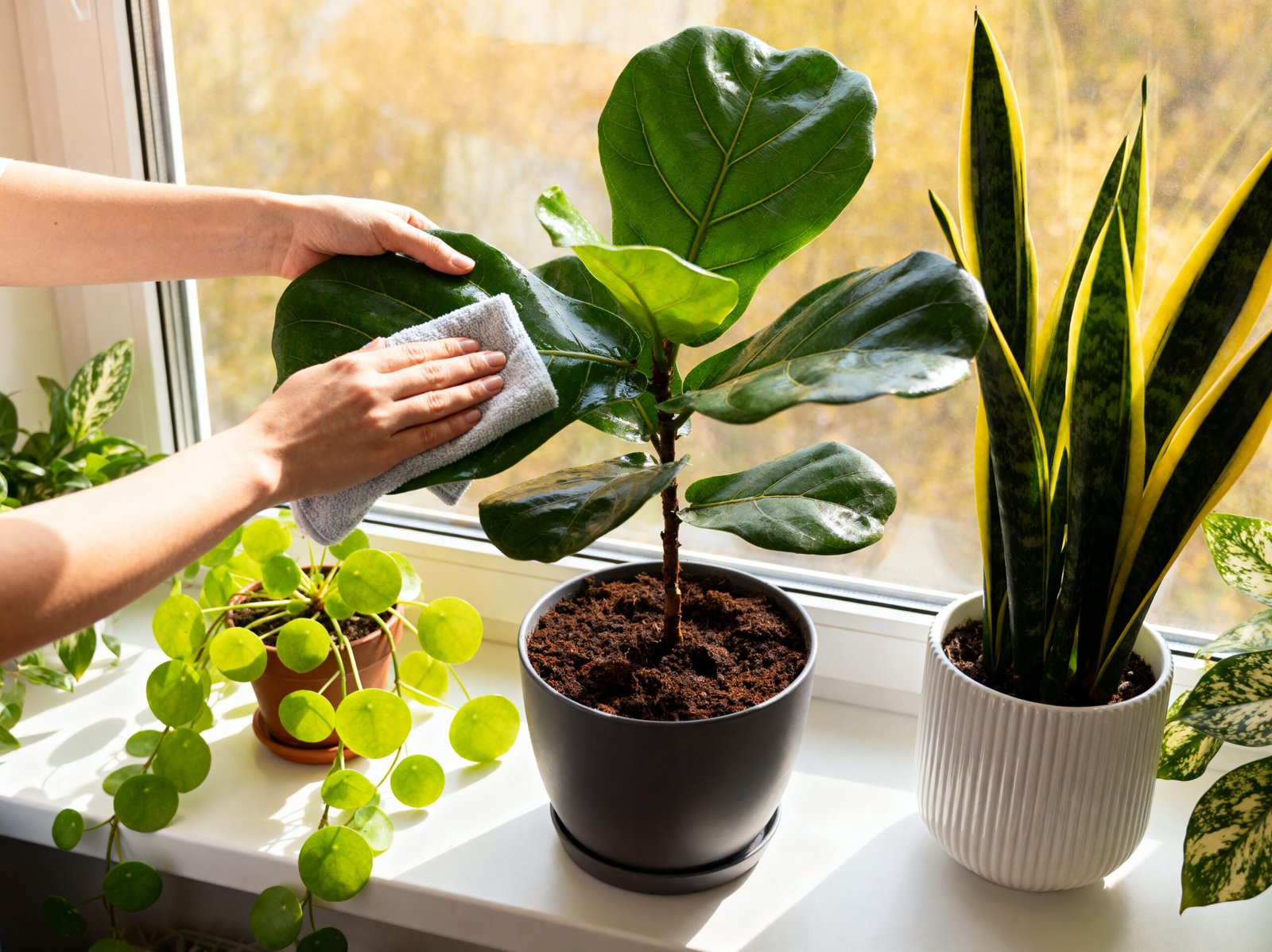
You’ve mastered the watering schedule, you’ve found the perfect south-facing window, and you’ve even remembered to fertilize on time. But if you run your finger across a leaf of your favorite Monstera and come away with a grey coat of grime, your plant is struggling more than you realize.
In their natural habitats, plants have the luxury of rain showers and wind to whisk away debris. In our homes, they are stationary targets for dust, pet dander, and kitchen grease. This isn’t just an aesthetic issue; it’s a health crisis for your greenery. A thick layer of dust acts like a curtain, blocking the sunlight necessary for photosynthesis and clogging the stomata (tiny pores) through which the plant breathes.
Cleaning your plants is the “secret sauce” to a thriving indoor jungle. In this comprehensive guide, we’re diving deep into the art and science of plant hygiene—from the gentle misting of delicate ferns to the heavy-duty scrubbing of waxy fiddle leaf figs.
Why Plant Hygiene is Non-Negotiable
Before we get into the how, let’s talk about the why. A clean plant isn’t just a “pretty” plant; it’s a high-performing biological machine.
1. Maximizing Photosynthesis
Dust particles reflect and scatter light. When your leaves are coated in dust, the plant has to work twice as hard to produce the energy it needs to grow. Keeping them clear ensures they get 100% of the available light.
2. Pest Detection and Prevention
Spider mites, mealybugs, and scale love to hide under a layer of dust. By cleaning your plants regularly, you are performing a “wellness check.” You’ll catch infestations weeks before they become a death sentence for your greenery.
3. Improving Indoor Air Quality
We buy plants to help purify our air, but a clogged plant can’t do its job. Clean leaves allow for better gas exchange, meaning your plant is more efficient at absorbing CO2 and releasing fresh oxygen.
The Master Toolkit: What You’ll Need
You don’t need fancy “leaf shine” chemicals (in fact, those can often do more harm than good). Most of what you need is already in your kitchen or cleaning closet:
- Microfiber cloths: Soft, lint-free, and perfect for grabbing dust.
- A soft-bristled paintbrush: For succulents and cacti.
- Lukewarm water: Never use ice-cold or hot water, which can shock the plant.
- Mild Castile soap: For stubborn grime or grease.
- A spray bottle: For fine mists.
Step-by-Step: Cleaning Techniques for Every Leaf Type
Not all plants are created equal. You wouldn’t treat a fuzzy African Violet the same way you treat a hardy Snake Plant.
The Large-Leafed Giants (Monstera, Rubber Trees, Ficus)
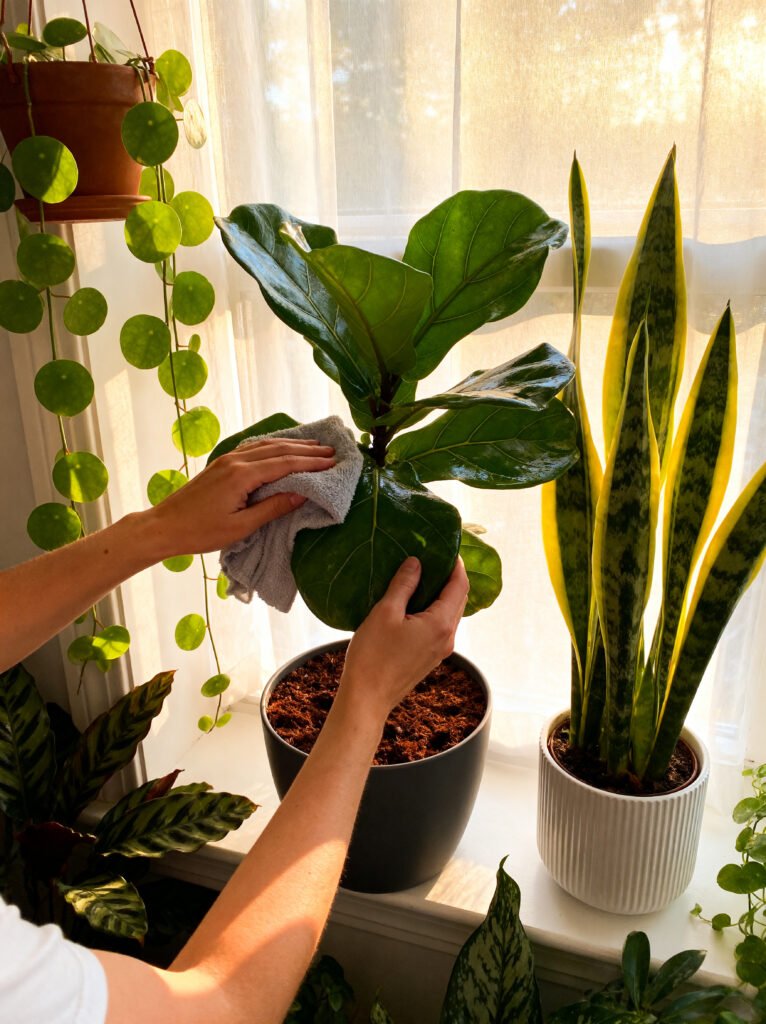
These are the dust magnets. For these, the “Support and Wipe” method is best.
- Place one hand under the leaf to provide a steady surface.
- Use a damp microfiber cloth to wipe from the stem toward the tip.
- Don’t forget the undersides! Pests love to hang out there.
The Small and Dainty (Pothos, Heartleaf Philodendron)
If you have a trailing plant with hundreds of small leaves, wiping them individually is a nightmare. Instead, give them a “Spa Day.”
- Place the pot in your shower or sink.
- Use a gentle lukewarm spray to rinse the dust away.
- Pro Tip: Wrap the base of the pot in a plastic bag to prevent the soil from washing away or becoming overwatered.
The Fuzzy Wonders (African Violets, Begonias)
Never get water on fuzzy leaves. Water trapped in the tiny hairs can lead to fungal spots and rot.
- Use a soft, dry paintbrush or a makeup brush to gently whisk away dust.
The Prickly Crowd (Cacti and Succulents)
Wiping a cactus is a recipe for a poked finger. Instead, use compressed air (held at a distance) or a soft brush to clean between the spines.
The “Leaf Shine” Debate: Natural vs. Store-Bought
Many people reach for commercial leaf shine products to get that “plastic” glow. Stop right there. These products are often oil-based and can clog the plant’s pores, essentially suffocating it.
If you want a natural shine, try a mixture of 90% water and 10% milk. The proteins in the milk break down grime and leave a soft, healthy sheen without the sticky residue.
Common Mistakes to Avoid
- Using Cold Water: This can cause permanent spotting on the leaves (especially on Marantas).
- Leaving Water Droplets in Direct Sun: Water can act like a magnifying glass, causing “burn spots” on the foliage. Always clean your plants in the morning or evening.
- Ignoring the Pot: Dust and mineral deposits on the outside of the pot can harbor mold. Give the container a quick wipe too!
Summary Table: Cleaning Frequency
| Plant Type | Method | Frequency |
|---|---|---|
| Large/Waxy | Damp Cloth Wipe | Every 2 weeks |
| Small/Trailing | Lukewarm Shower | Once a month |
| Fuzzy/Textured | Dry Brush | As needed |
| Cacti/Succulents | Compressed Air | Every 2-3 months |
Exporter vers Sheets
Final Thoughts
Cleaning your plants might feel like a chore at first, but it’s actually a wonderful way to practice mindfulness and connect with your indoor garden. As you wipe away the dust, you’ll notice new growth points, subtle color changes, and the general “vibe” of your plants.
Treat your plants to a deep clean this weekend—they’ll thank you with faster growth, brighter colors, and cleaner air for your home.