

Cleaning your oven can feel like a big chore, right? You open it up, see all those baked-on splatters, and just want to close the door again. But what if I told you that you don’t need those harsh chemical cleaners that make your eyes water and your house smell for days? There are actually some really simple, natural ways to get your oven looking great. We’re going to look at the best natural oven cleaner recipe options that use stuff you probably already have in your kitchen. Get ready for a sparkling clean oven without the nasty fumes!
Table of Contents
Key Takeaways
- Making your own oven cleaner with common household items like baking soda and vinegar is effective and avoids harsh chemicals.
- A simple baking soda paste, left to sit on grime, helps loosen tough messes for easier wiping.
- Vinegar can be used as a spray for lighter cleaning or as a final step to react with baking soda residue.
- For tougher spots, adding salt to a paste can provide extra scrubbing power.
- Always let your oven cool completely before applying any cleaning solution and ensure good ventilation.
Baking Soda Paste
When it comes to tackling baked-on grease and stubborn food spills inside your oven, a simple baking soda paste is a real game-changer. It’s one of those classic, no-fuss solutions that actually works. You probably already have the main ingredient in your pantry.
To make it, you’ll mix about 3/4 cup of baking soda with 1/4 cup of warm water. You want to get it to a consistency that’s like toothpaste – thick enough to stick to the oven walls but not so dry that it crumbles. If you need a larger batch for a big oven or really tough spots, just keep that 3:1 ratio of baking soda to water in mind.
Here’s how to use it:
- Preparation is Key: Before you start slathering paste everywhere, make sure to protect your oven’s sensitive parts. Cover heating elements, thermostats, and any openings with aluminum foil. This prevents damage and ensures the paste only works on the grime.
- Application Time: Using a brush or even an old toothbrush for those tight corners, spread the paste all over the interior surfaces of your oven. Be sure to avoid the areas you just covered with foil. For really tough, old messes, letting this paste sit for 12 to 24 hours can make a huge difference. It gives the baking soda time to really break down the gunk.
- Wipe Away the Mess: After the waiting period, use a plastic scraper to gently remove the dried paste. Then, grab a damp cloth and wipe down the oven interior. You might need to do a few passes to get rid of any streaks or residue.
This method is surprisingly effective and much gentler than those harsh chemical cleaners you find in stores. It’s a great way to get your oven looking its best without all the fumes. For a bit of extra cleaning power, you can even add a few drops of essential oil to the paste for a pleasant scent, though this is totally optional. You can find more tips on using natural ingredients for cleaning here.
Baking soda works by being a mild alkali that helps to break down grease and acidic food stains. When it’s left to sit, it softens the burnt-on bits, making them much easier to scrub away later. It’s a simple chemical reaction that saves you a lot of elbow grease.
Vinegar Spray
For lighter messes or as a follow-up to a more intensive cleaning, a simple vinegar spray can work wonders. It’s great for general upkeep and tackling those everyday splatters before they become a real problem. This acidic solution helps to cut through grease and grime, leaving surfaces shiny.
Making this cleaner is incredibly straightforward. You just need a spray bottle and two common household items. Mix equal parts white vinegar and water directly in the bottle. Give it a good shake, and you’re ready to go.
Here’s a quick rundown:
- Mix: Combine equal parts white vinegar and water in a spray bottle.
- Apply: Spray generously onto the oven’s interior surfaces, avoiding heating elements.
- Wait: Let it sit for about 30 to 60 minutes. For tougher spots, you might need a bit longer.
- Wipe: Wipe down with a damp cloth or sponge. You might need to rinse your cloth a few times.
While the smell of vinegar can be a bit strong for some, it dissipates quickly once dry, leaving your oven fresh. If the scent is a concern, you can add a few drops of essential oil, like lemon or tea tree, to the mixture for a more pleasant aroma and added cleaning power. Just remember to ventilate the area well when you’re working with it.
This spray is particularly useful for maintaining a clean oven between deeper cleans. It’s a good way to keep things manageable and prevent buildup. You can find more tips on using vinegar for cleaning around your home.
Lemon Juice
Lemon juice is another great natural option for cleaning your oven, especially if you’re not a fan of the smell of vinegar. It has a natural acidity that helps break down grease and grime, and it leaves behind a really pleasant, fresh scent.
It’s a fantastic way to add a little extra cleaning power and a nice aroma to your DIY oven cleaner.
Here’s a simple recipe that uses lemon juice:
- 1 cup lemon juice
- 1 tablespoon cornstarch
- 1 teaspoon dish soap
Just mix the lemon juice and cornstarch together, then heat it until it thickens up a bit. Let it cool down, then stir in the dish soap. You can apply this mixture to your oven and let it sit for about 20 minutes before wiping it clean. It’s a good idea to check out this guide on how to clean stainless steel appliances for more tips on keeping your kitchen looking its best.
While lemon juice is effective for general cleaning and adding a fresh scent, it might not be as strong as baking soda or vinegar for really tough, baked-on messes. You might need to scrub a bit more or combine it with another ingredient for those stubborn spots.
Salt
Salt is another one of those pantry staples that can really help out when you’re tackling a dirty oven. It’s not as strong as baking soda for breaking down grease, but it’s got a great gritty texture that makes it a fantastic abrasive for scrubbing. Think of it like a natural scouring powder.
When you’ve got those really tough, burnt-on bits stuck to the bottom or sides of your oven, salt can be a real lifesaver. It helps to loosen them up so you can wipe them away more easily. It’s especially useful when combined with other ingredients like baking soda or lemon juice to give your cleaning paste a bit more power.
Here’s a quick rundown of how salt helps:
- Scrubbing Power: Its coarse grains physically lift and scrape away burnt-on food.
- Loosens Grime: Helps break the bond between stubborn food residue and the oven surface.
- Boosts Other Cleaners: Adds extra oomph when mixed with pastes like baking soda.
While salt is great for scrubbing, be mindful of how much you use. Too much might be too harsh for some oven surfaces, especially if they have special coatings. Always test in a small, inconspicuous area first if you’re unsure.
For a simple boost, you can sprinkle salt directly onto a damp sponge and scrub at tough spots. Or, try mixing it into a paste with a little water or lemon juice for a more targeted approach. It’s a simple ingredient, but it makes a noticeable difference on those really baked-on messes.
Dish Soap
Dish soap is a surprisingly effective degreaser, and it’s something most of us have in our kitchens already. When you’re dealing with those stubborn, greasy oven messes, a good dish soap can really help break them down. It works by lifting grease and grime from surfaces, making it easier to wipe away.
It’s a fantastic addition to baking soda pastes or other homemade cleaners. You don’t need a lot; just a teaspoon or two mixed with other ingredients can make a big difference. Think of it as a little helper that boosts the cleaning power of your other natural ingredients.
Here’s how it fits into a cleaning mix:
- Boosts Grease Cutting: Helps to emulsify and lift baked-on grease.
- Mild Abrasive (when combined): When mixed with baking soda, it creates a paste that can gently scrub away residue.
- Readily Available: You likely already have it on hand, making it a convenient choice.
While dish soap is great for cutting grease, remember to use it in moderation within your homemade cleaners. Too much can create excessive suds, making it harder to rinse clean from your oven.
For example, a simple mix could be baking soda, a little water to form a paste, and then a small squirt of dish soap. This combination tackles grease and grime without harsh chemicals.
Water
Water is the unsung hero in many natural cleaning recipes, and for good reason. It’s not just a filler; it plays a key role in diluting stronger ingredients and helping to rinse away loosened grime. Think of it as the universal solvent, ready to help.
When you’re mixing up a baking soda paste, water is what turns that powdery substance into a spreadable goop. You want just enough to make it stick to the oven walls without being too runny. A good starting point is often a few tablespoons added to about half a cup of baking soda, but you’ll adjust as you go. The goal is a consistency that clings, not drips.
Water is fundamental for creating the right texture in many homemade cleaners. It helps activate ingredients and makes them easier to apply and remove.
Beyond just mixing, water is also your best friend for the final wipe-down. After you’ve scrubbed away the gunk with your chosen cleaner, a damp cloth dipped in plain water is perfect for getting rid of any residue. This step is important to make sure you’re not leaving behind any cleaning agents, natural or otherwise. It’s all about that final sparkle and a clean slate. You can find more tips on how to deep clean oven with baking soda if you need more ideas.
Cornstarch
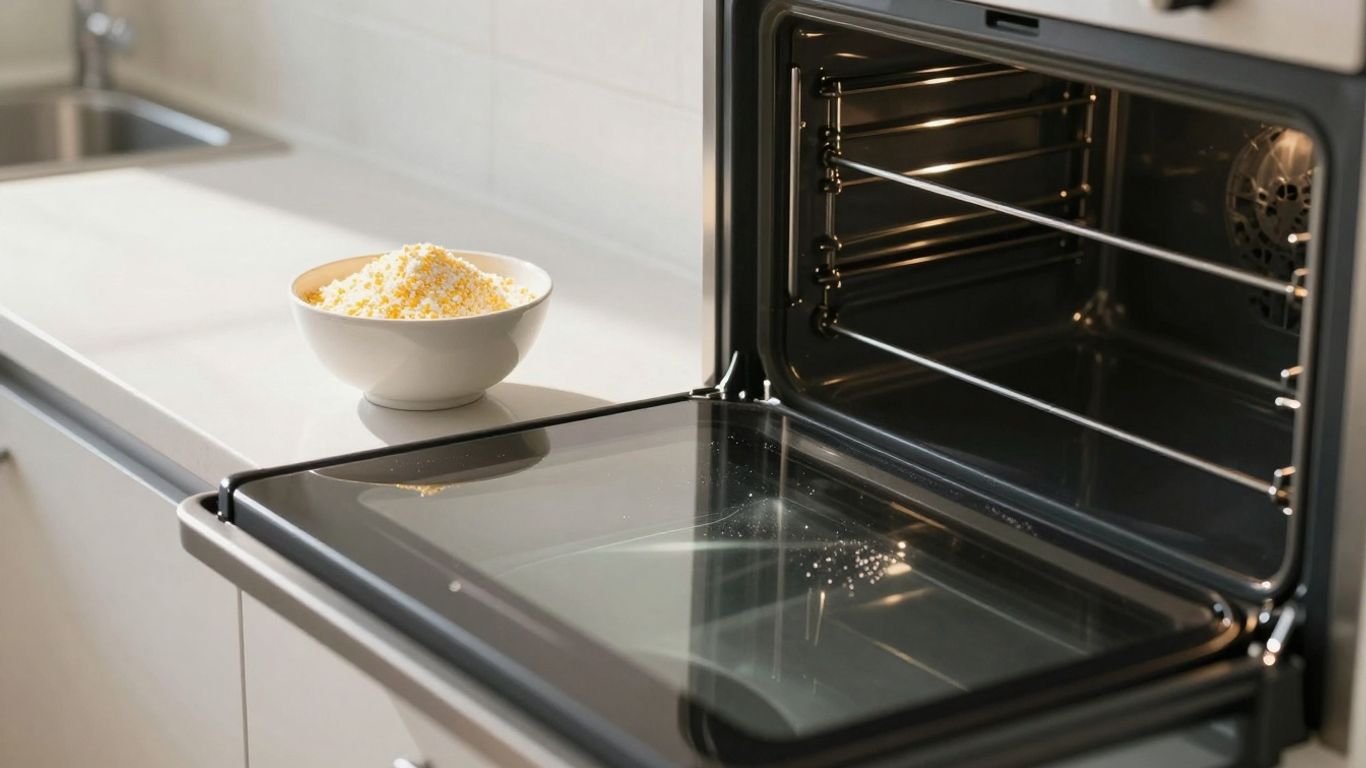
Cornstarch might seem like just a thickening agent for your gravy, but it can actually be a surprisingly helpful player in your natural oven cleaning arsenal. When mixed with liquids like vinegar or lemon juice and heated, it forms a paste that can help lift grease and grime.
It works by creating a thicker, more clingy substance that stays put on vertical surfaces, giving it more time to break down stubborn messes.
Here’s how you might incorporate it:
- Vinegar and Cornstarch Paste: Mix about 1 cup of white vinegar with 1 tablespoon of cornstarch. Heat this mixture gently until it thickens into a paste. Let it cool completely before applying it to the oven interior. Allow it to sit for about 20 minutes, then wipe clean.
- Lemon Juice and Cornstarch Paste: Similar to the vinegar method, combine 1 cup of lemon juice with 1 tablespoon of cornstarch. Heat until thickened, cool, and then apply. You can even add a teaspoon of dish soap to this mixture for extra cleaning power.
While cornstarch isn’t usually the star of the show on its own for oven cleaning, its ability to thicken solutions makes it a useful addition when you need a cleaner that sticks around and works harder on those baked-on bits. It’s a simple ingredient that can make your homemade cleaners a bit more effective, especially on those tough spots.
Hydrogen Peroxide
Hydrogen peroxide is another one of those handy household items that can help with tough cleaning jobs, including your oven. It’s a bit of a disinfectant and can help break down some of the gunk that builds up.
It’s not as common in homemade oven cleaners as baking soda or vinegar, but it can be a good addition, especially when you’re dealing with really stubborn spots. You can mix it with baking soda to make a paste. The peroxide helps lift stains, and the baking soda gives it some grit to scrub away the mess.
Here’s a simple way to use it:
- Mix about 1 tablespoon of hydrogen peroxide with 3 tablespoons of baking soda. You might need to add a tiny bit more peroxide or baking soda to get a good paste consistency, kind of like toothpaste.
- Add a teaspoon of dish soap to the mix. This helps cut through grease even more.
- Spread this paste all over the greasy and baked-on areas of your oven. Try to avoid the heating elements, just like with other cleaners.
- Let it sit for at least 20 minutes, or even longer if you have really tough grime.
- Wipe it all out with a damp cloth. You might need to do a second wipe-down with a clean, damp cloth to get all the residue off.
While hydrogen peroxide is generally safe, it’s always a good idea to wear gloves when you’re cleaning, especially if you have sensitive skin. It can sometimes cause mild irritation.
It’s a good idea to test this paste on a small, inconspicuous area first, just to make sure it doesn’t affect your oven’s finish. It’s a pretty gentle cleaner, but better safe than sorry, right?
Rubbing Alcohol
Rubbing alcohol, also known as isopropyl alcohol, can be a surprisingly effective degreaser for your oven. Its quick evaporation rate means you won’t be left with a sticky residue, which is a big plus when you’re trying to get your oven sparkling clean. It’s particularly good at cutting through greasy splatters that seem to bake onto the oven walls.
While it’s not usually the main ingredient in a homemade oven cleaner, it can be a helpful addition to a spray solution. Think of it as a booster for tackling those tougher grease spots.
Here’s a simple way to incorporate it:
- Mix about 1/4 cup of rubbing alcohol with 1/4 cup of water.
- Add a few drops of dish soap to the mixture.
- Pour into a spray bottle.
Spray this solution directly onto greasy areas inside your oven. Let it sit for a few minutes – it works pretty fast – and then wipe away with a damp cloth. You might need to do a second wipe with plain water to make sure all the alcohol smell is gone.
Be sure to ventilate the area well when using rubbing alcohol, as the fumes can be strong. Also, avoid spraying it directly onto heating elements or any electrical components within the oven.
Essential Oil
Adding a few drops of essential oil to your homemade oven cleaner isn’t just about making it smell nice, though that’s a big plus. Many essential oils actually have natural cleaning properties themselves. Think of oils like lemon, tea tree, or eucalyptus. They can help cut through grease and have some antibacterial qualities, giving your cleaning paste or spray a little extra oomph.
It’s a simple way to boost effectiveness and leave your kitchen smelling fresh, not like harsh chemicals.
Here’s a quick look at some popular choices:
- Lemon Oil: Great for cutting grease and leaving a bright, clean scent.
- Tea Tree Oil: Known for its strong antibacterial and antifungal properties.
- Eucalyptus Oil: Helps with disinfecting and has a refreshing aroma.
- Peppermint Oil: Can add a strong, invigorating scent and may help deter pests.
Just remember to use them sparingly. A little goes a long way, and you don’t want to overpower the cleaning mixture. You can find natural oils in cleaning products that offer these benefits.
When adding essential oils, it’s best to mix them into your cleaning solution right before you plan to use it. This helps preserve their scent and potency.
For a standard baking soda paste, try adding about 5-10 drops per cup of paste. If you’re making a spray, 10-15 drops per spray bottle should be plenty. Always do a small patch test in an inconspicuous area if you’re concerned about surfaces.
Your Sparkling Oven Awaits!
So there you have it! Cleaning your oven doesn’t need to be a big, scary chore involving harsh chemicals and fumes that make your eyes water. We’ve seen how simple ingredients like baking soda and vinegar can work wonders, tackling even those stubborn burnt-on messes. Whether you go for the classic baking soda paste or a quick vinegar spray for touch-ups, you’ve got the tools to make your oven shine. Remember, a little regular cleaning goes a long way, and soon you’ll have a kitchen that feels fresh and looks great, all without breaking the bank or your nose. Give these natural methods a try – your oven (and your lungs) will thank you!
Read Also: How to Remove Red Wine Stains
FAQ
What’s the easiest way to clean my oven naturally?
The simplest and most effective natural oven cleaner is a paste made from baking soda and water. Just mix them to get a toothpaste-like consistency, spread it inside your oven (avoiding the heating parts), let it sit for at least 20 minutes or even overnight, and then wipe it all out with a damp cloth. For tougher spots, a little extra rubbing might be needed.
Can I mix baking soda and vinegar together for cleaning?
While they create a fun fizzing reaction, mixing baking soda and vinegar directly can actually cancel out their cleaning powers. It’s better to use them separately. For example, you can use a baking soda paste to clean, then spray vinegar on any remaining baking soda residue to help neutralize it before wiping clean.
How do I clean the oven glass without harsh chemicals?
For the oven glass, a baking soda paste works wonders. Apply it to the glass, let it sit for about 30 minutes, and then wipe it clean with a damp cloth. A spray made of equal parts white vinegar and water also works well for a streak-free shine after you’ve removed the grime.
What if I have really tough, burnt-on food in my oven?
For stubborn messes, you might need a bit more power. Try making a paste with baking soda, a little salt, and lemon juice. The salt adds extra scrubbing power. Apply this paste to the burnt areas and let it sit for a couple of hours or overnight before scrubbing it away.
How often should I clean my oven naturally?
Cleaning your oven doesn’t have to be a huge chore! Doing a quick wipe-down with a vinegar spray every week or two can help prevent major build-up. For a deeper clean using baking soda, you might do that every few months, or whenever you notice significant grease and grime.
Are natural oven cleaners safe to use around food?
Yes, natural cleaners made from ingredients like baking soda, vinegar, and lemon juice are generally safe to use around food surfaces. Unlike commercial cleaners, they don’t leave behind harsh chemical fumes or residues, making them a healthier choice for your kitchen.