
Tired of those store-bought fabric softeners with their strong smells and weird chemicals? Me too. It turns out you don’t need all that stuff to get soft clothes. You can actually make your own natural fabric softener right at home using things you probably already have. It’s way cheaper and better for you and the planet. Let’s figure out how to make natural fabric softener for softer clothes.
Table of Contents
Key Takeaways
- Making your own fabric softener is a simple and cost-effective way to get soft clothes without harsh chemicals.
- White vinegar is a great base for natural fabric softener, helping to soften clothes and remove residue without leaving a strong scent.
- Baking soda can also be used to soften fabrics and has the added benefit of neutralizing odors.
- Alternatives like wool dryer balls and homemade dryer sheets offer reusable and customizable ways to soften laundry.
- Experimenting with ingredients like essential oils allows you to personalize the scent and effectiveness of your homemade fabric softener.
Understanding Natural Fabric Softener Benefits
You know those laundry aisles at the store? They can be pretty overwhelming with all the strong, artificial smells. For a long time, I just accepted that’s how laundry was supposed to smell. But then I started thinking about what’s actually in those bottles. Turns out, many commercial fabric softeners contain chemicals that aren’t great for us or the planet. Making the switch to natural alternatives isn’t just about avoiding those intense fragrances; it’s about a healthier home and a lighter environmental footprint.
Why Choose Natural Over Commercial Softeners
Commercial fabric softeners often rely on synthetic fragrances and chemicals that can cause issues. For some people, these scents can trigger headaches or asthma symptoms. They can also be harsh on sensitive skin, leading to irritation or rashes. Plus, these chemicals don’t just disappear after washing; they can build up on your clothes and even in your washing machine, making it harder to clean properly. Over time, this buildup can even affect the elasticity of your fabrics, making clothes wear out faster.
Environmental and Health Advantages
Opting for natural fabric softeners means saying goodbye to potentially harmful ingredients. Many commercial softeners contain quaternary ammonium compounds (like DHTDMAC), which can be irritating and don’t break down easily in the environment. They can end up in our waterways, affecting aquatic life. Natural alternatives, like vinegar or baking soda, are biodegradable and much gentler. They also avoid contributing to indoor air pollution from strong artificial scents. Choosing natural is a win for your health and the Earth.
Cost-Effectiveness of DIY Solutions
Let’s be honest, buying fabric softener regularly can add up. When you start looking at the price per load, it’s not insignificant. The beauty of DIY natural fabric softeners is that they often use ingredients you probably already have in your pantry or can buy very cheaply. Things like white vinegar and baking soda are incredibly inexpensive, especially when bought in larger quantities. Even adding a few drops of essential oil for scent is usually more economical in the long run than buying a new bottle of commercial softener every month. It’s a simple way to save money without sacrificing soft clothes.
Here’s a quick look at why natural makes sense:
- Gentler Ingredients: Avoids harsh chemicals and synthetic fragrances.
- Better for Skin: Reduces the risk of irritation and allergic reactions.
- Eco-Friendly: Uses biodegradable ingredients that are kinder to the environment.
- Budget-Friendly: Utilizes common household items for significant savings.
- Machine Care: Helps prevent residue buildup in your washing machine.
Simple Vinegar-Based Fabric Softener Recipes
When it comes to softening your clothes naturally, white vinegar is a real workhorse. It’s not just for cleaning kitchens; this common household staple can work wonders in your laundry room too. Vinegar helps break down detergent residue and mineral buildup that can make fabrics feel stiff and scratchy. Plus, it’s incredibly budget-friendly and readily available.
Basic White Vinegar Softener
This is the simplest way to get softer clothes. You don’t need much, just a bit of distilled white vinegar. It might sound odd, but the vinegar smell completely disappears during the drying cycle, leaving your clothes smelling fresh and feeling wonderfully soft. It’s a fantastic way to tackle static cling too.
- How to Use: Add about 1/4 to 1/2 cup of white vinegar directly into your washing machine’s fabric softener dispenser during the rinse cycle. The amount can vary depending on your load size and how hard your water is.
- Benefits: Removes detergent residue, softens fabrics, reduces static, and is safe for most materials.
- Cost-Effective: A gallon of vinegar is very inexpensive and can last for many loads.
Vinegar and Essential Oil Blend
Want a little bit of natural fragrance in your laundry? Adding a few drops of your favorite essential oil to the white vinegar is a great way to go. This transforms the basic vinegar rinse into a more aromatic experience. Just remember that the scent will be subtle after drying.
- Ingredients:
- 1 gallon distilled white vinegar
- 20-30 drops of essential oil (lavender, lemon, or tea tree are popular choices)
- Instructions: Combine the vinegar and essential oils in a large container. Give it a gentle stir. Use 1/4 to 1/2 cup per load in the rinse cycle. You can find great deals on essential oils for scent online.
Vinegar and Conditioner Combination
For an extra boost of softness, some people like to combine vinegar with a bit of hair conditioner. This method can make clothes feel incredibly smooth, almost like commercial softeners. However, it’s worth noting that some conditioners might slightly affect the absorbency of towels or athletic wear, so you might want to use this blend for everyday clothing.
- Ingredients:
- 5 cups hot water
- 3 cups white vinegar
- 1 cup hair conditioner (a basic, inexpensive one works well)
- Instructions: In a bowl, mix the hot water and conditioner until the conditioner is smooth and fully incorporated. Then, stir in the vinegar. Pour the mixture into a container and use about 1/4 to 1/2 cup in your machine’s softener dispenser. This recipe is super cheap to make, costing only a few cents per load.
Using vinegar in your laundry is a smart move. It’s a natural deodorizer and helps keep your washing machine clean too by preventing buildup. Just be sure to add it during the rinse cycle, not the wash cycle, to get the most softening benefit.
Exploring Baking Soda for Laundry Softness
Baking soda, that humble box found in most kitchens, is a surprisingly effective laundry helper. It’s not just for baking cookies or cleaning out the fridge; this simple powder can do wonders for your clothes. It works by gently adjusting the pH of your wash water, which helps prevent minerals from settling into your fabrics. This means your clothes come out feeling softer and cleaner, and it even helps with lingering odors. It’s a fantastic, budget-friendly addition to your laundry routine.
How Baking Soda Softens Clothes
So, how does this common household item actually make your clothes feel softer? When you add baking soda to your wash, it helps to break down any residue left behind by detergents. This residue can make fabrics feel stiff and rough. By neutralizing these build-ups, baking soda allows the fibers to relax, resulting in a noticeably softer feel. It also helps keep minerals suspended in the water, so they don’t get embedded in your clothes. It’s a simple science that makes a big difference.
Odor Neutralization with Baking Soda
One of the best things about baking soda is its natural ability to tackle odors. Instead of just masking smells with strong perfumes like many commercial softeners do, baking soda actually neutralizes them. This is especially helpful for workout clothes, towels, or anything that tends to hold onto unpleasant smells. Adding about half a cup to your wash cycle can make a significant difference in how fresh your laundry smells. It’s a gentle way to get rid of funk without adding artificial fragrances.
Combining Baking Soda with Other Ingredients
While baking soda is great on its own, you can also combine it with other natural ingredients for even better results. For a bit of fragrance, you can mix baking soda with a few drops of your favorite essential oil. Just be sure to mix them well. A common ratio is about 2 cups of baking soda to 15 drops of essential oil, stored in an airtight container. Use about half a cup of this mixture in your rinse cycle. This is a great way to get soft, fresh-smelling clothes without any harsh chemicals. You can find more information on using baking soda as a laundry aid here.
Baking soda is a fantastic, multi-purpose ingredient for laundry. It softens fabrics, neutralizes odors, and can even help brighten whites. Its mild abrasive quality helps lift dirt without damaging fibers, making it a gentle yet effective choice for everyday washing.
DIY Fabric Softener Crystals and Powders
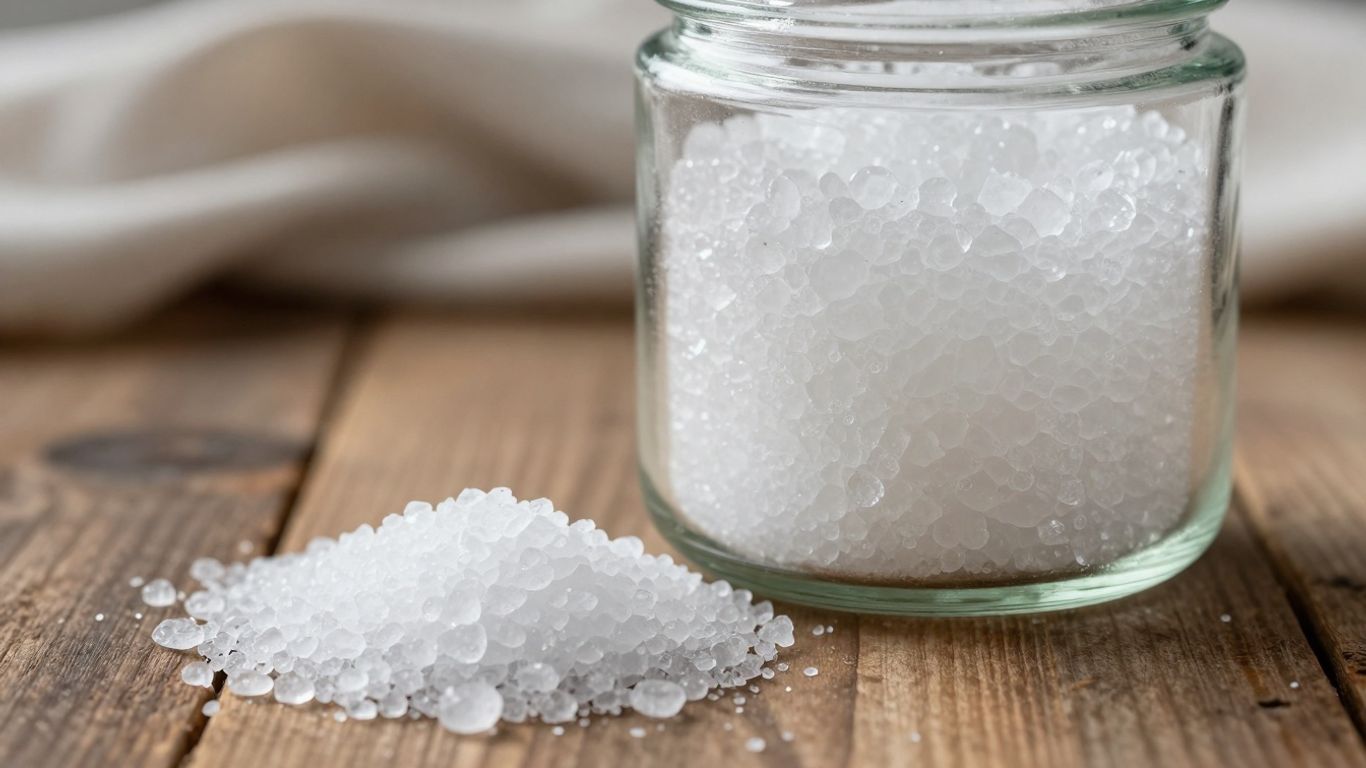
Sometimes, you want something a little different than a liquid softener. Maybe you’re looking for something easier to store, or perhaps you just like the idea of making little crystals or powders for your laundry. It turns out, you can totally do that with stuff you probably already have around the house.
Creating Salt-Based Softener Crystals
Salt is surprisingly good at softening fabrics. It works by helping to loosen up the fibers in your clothes, making them feel softer and less stiff after washing. Plus, it can help keep minerals from hard water from settling into your fabrics, which can make them feel rough over time. Making salt crystals is pretty simple.
You’ll need:
- 4 cups of salt (coarse sea salt or Himalayan salt work well)
- 30 drops of your favorite essential oil(s) (optional, for scent)
Here’s how to make them:
- Get a jar with a lid.
- Pour the salt into the jar.
- Add the essential oils, if you’re using them.
- Put the lid on and shake it all up really well until the oil is mixed into the salt.
To use, just add about half a cup of these crystals to your laundry. You can toss them in with your detergent, or add them during the final rinse cycle. If you add them with the detergent, you can still add a bit of vinegar to the rinse cycle for extra softening power.
Epsom Salt vs. Table Salt for Softening
When it comes to salt for softening, you might wonder if Epsom salt is the same as regular table salt (like sea salt or Himalayan salt). Some people swear by Epsom salt for making clothes, especially jeans, feel super smooth. However, there’s a bit of a debate. A few folks worry that the minerals in Epsom salt might build up on clothes or mess with how your laundry soap works, especially if you have hard water.
While I haven’t personally run into that issue, it’s something to keep in mind. If you have really hard water, you might want to stick with regular table salt just to be safe.
Powdered Softener Options
If crystals aren’t your thing, you can also make a simple powdered softener. Baking soda is a fantastic ingredient for this. It helps balance the pH in your washing machine, which can make water feel softer and allow your detergent to work better. It’s also a great odor neutralizer, so your clothes come out smelling fresh. To make a simple baking soda softener, just mix 2 cups of baking soda with about 15 drops of essential oil if you want a nice scent. Store this powder in an airtight container. Add about half a cup to the rinse cycle of your wash.
Making your own fabric softener powders or crystals is a neat way to get soft clothes without a lot of fuss. It’s a simple swap that can make a difference in how your laundry feels and smells, and it’s pretty gentle on your wallet too.
Alternative Natural Softening Methods
Beyond the common vinegar and baking soda tricks, there are some other really neat ways to get your laundry feeling soft without reaching for those chemical-laden store-bought options. These methods are often reusable and can save you money in the long run.
The Power of Wool Dryer Balls
Wool dryer balls are a fantastic alternative to traditional dryer sheets. These little spheres, usually made from 100% wool, work by bouncing around in your dryer. This action helps to separate your clothes, allowing air to circulate better. This improved airflow speeds up drying time and helps to naturally soften fabrics. They’re also great for reducing static cling.
If you like a subtle scent, you can add a few drops of your favorite essential oil directly onto the wool balls before tossing them in with your laundry. Just be mindful that essential oils can be flammable, so use them sparingly and at your own risk. They’re a reusable option, meaning you can use them load after load, making them both eco-friendly and cost-effective.
DIY Reusable Dryer Sheets
If you prefer something closer to a traditional dryer sheet, you can make your own reusable ones. These are super simple to create and can be customized with scents. You’ll need some fabric scraps – cotton or flannel work well. Cut them into squares or rectangles, about the size of a standard dryer sheet. You can then soak these fabric squares in a mixture of water and a bit of white vinegar, or even a diluted essential oil solution. Wring them out well before adding them to your dryer. They won’t provide the same level of softening as wool dryer balls, but they do help reduce static and can impart a light fragrance.
Using Tennis Balls for Enhanced Softness
This one might sound a bit odd, but tennis balls can actually help soften laundry, especially items like towels and comforters. The idea is similar to wool dryer balls – the tennis balls bounce around in the dryer, fluffing up the fabric and making it feel softer and more voluminous. Make sure to use clean tennis balls, perhaps ones specifically designated for laundry use, to avoid transferring any dirt or grime onto your clothes. This method is particularly effective for bulky items that tend to get compressed in the dryer.
Tips for Customizing Your Homemade Softener
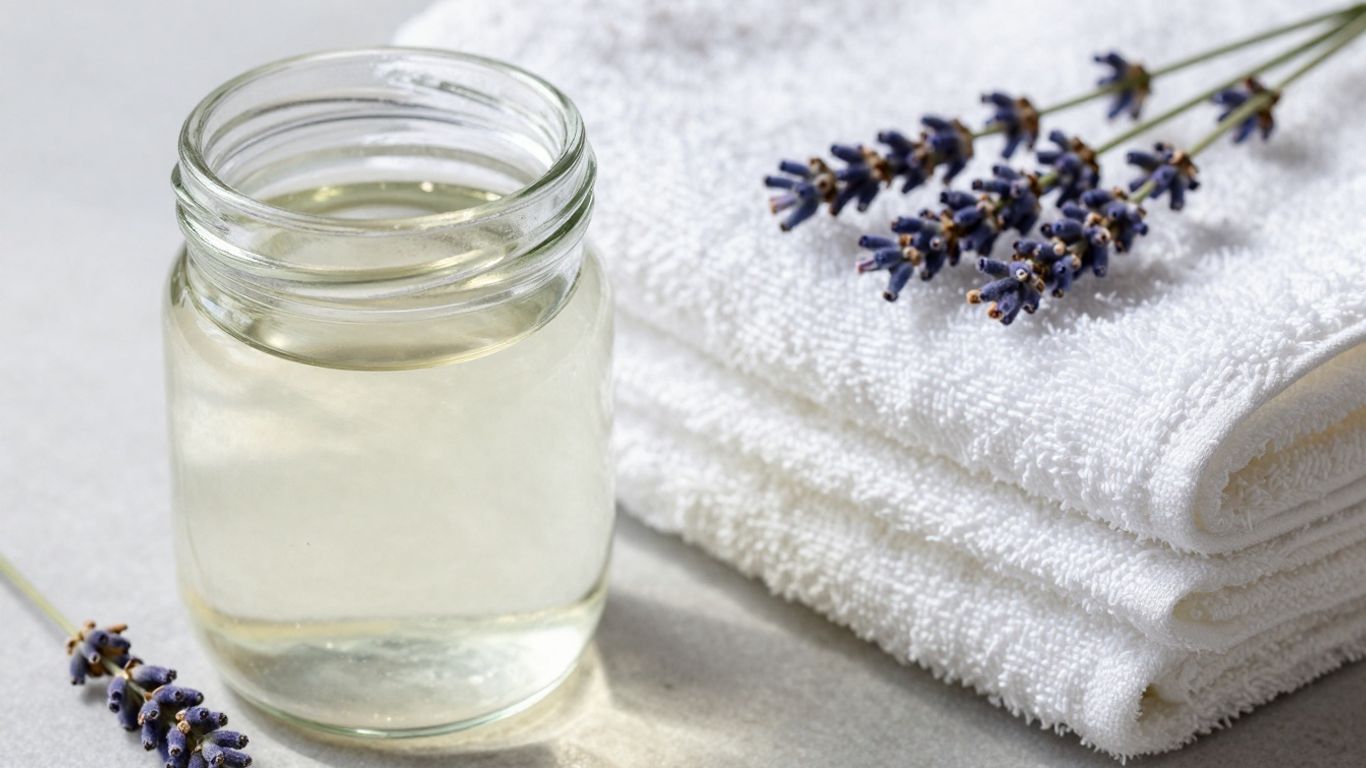
So, you’ve got the basic recipes down, but what if you want to make your homemade fabric softener truly yours? It’s actually pretty simple to tweak these recipes to fit your preferences and laundry needs. Think of it like adding your own personal touch to everything you do.
Selecting Essential Oils for Fragrance
This is where you can really get creative. Essential oils not only add a pleasant scent to your laundry but can also offer other benefits. Lavender is great for relaxation, lemon or orange oils can add a bright, clean smell, and peppermint can give a refreshing boost. Just a few drops are usually enough, but you can experiment to find your perfect balance. Remember, some oils are stronger than others, so start small.
Here are a few popular choices and their common associations:
- Lavender: Calming, relaxing
- Lemon: Uplifting, fresh, clean
- Peppermint: Invigorating, refreshing
- Eucalyptus: Clean, medicinal (good for activewear)
- Chamomile: Soothing, gentle
Adjusting Ingredient Ratios
Sometimes, you might find that a recipe is a little too strong or not quite strong enough. That’s perfectly normal! For vinegar-based softeners, if you find the vinegar smell lingers a bit too much (though it usually dissipates in the wash), you can slightly reduce the amount of vinegar or increase the amount of essential oils. If you’re using baking soda and it seems to be leaving a residue, try using a bit less in your next load. The key is to make small adjustments and observe the results.
For example, if you’re using a standard washing machine and the recipe calls for 1/2 cup of softener, but you feel it’s too much, try using 1/3 cup next time. For HE machines, if 1/4 cup seems excessive, drop it down to 2 tablespoons.
Storage and Usage Guidelines
How you store your homemade softener matters. Most liquid softeners, especially those with vinegar, do best in a cool, dark place. If you’ve mixed vinegar with essential oils, give the bottle a good shake before each use, as the oils and vinegar can separate. For powdered softeners like baking soda or salt mixtures, keep them in an airtight container to prevent clumping. Always label your containers clearly so you don’t mix them up!
When adding your homemade softener, remember to put it in the rinse cycle compartment of your washing machine. Adding it too early can cause it to be washed away before it can do its job. For most standard machines, about 1/4 to 1/2 cup is a good starting point, while HE machines typically need less, around 1/4 cup or even less.
Don’t be afraid to experiment a little. What works perfectly for one person’s laundry might need a slight tweak for another’s. Happy softening!
READ ALSO: How To Clean Coffee Maker Thoroughly For The Best Brew
Wrapping Up Your Natural Softener Journey
So there you have it! Making your own fabric softener is pretty straightforward, and honestly, it’s kind of satisfying to know exactly what’s going into your laundry. Whether you go with the simple vinegar trick, the conditioner blend, or even wool dryer balls, you’re taking a step away from those strong chemical smells and potentially harsh ingredients found in store-bought stuff. Plus, it’s way easier on your wallet. Give these methods a try and see how soft you can get your clothes without all the fuss. Your laundry, and maybe even your skin, will thank you for it.
FAQ
Why should I use natural fabric softener instead of store-bought ones?
Store-bought softeners often have strong, fake smells and chemicals that can bother people with allergies or sensitive skin. They can also be harsh on your clothes’ elastic over time and aren’t great for the environment. Natural options are gentler, often cheaper, and you know exactly what’s in them.
Is vinegar really safe to use as a fabric softener?
Yes, white vinegar is a fantastic natural fabric softener! Don’t worry about the smell; it disappears when your clothes dry. It actually helps get rid of leftover soap and minerals, making your clothes feel softer and fluffier. It’s safe for most fabrics, but it’s always a good idea to test it on a small spot first.
Can I add essential oils to my homemade softener?
Absolutely! Adding a few drops of your favorite essential oils is a great way to give your laundry a pleasant, natural scent. Just be aware that some sources suggest using essential oils in the dryer with wool balls carries a small risk, so use them cautiously or consider other scent options like sachets.
How do baking soda and salt work as fabric softeners?
Baking soda helps balance the water in your washer, making it less harsh on fabrics, and it’s also great at getting rid of smells. Salt, especially coarse sea salt, can also soften clothes. Some people like Epsom salt, but it might leave buildup on certain fabrics or in hard water.
What are wool dryer balls and how do they help?
Wool dryer balls are like reusable dryer sheets made from wool. You toss them in the dryer with your wet clothes. They help clothes dry faster by separating them and allowing air to move around better. They also naturally soften fabrics and reduce static cling, without any chemicals.
How long do these homemade softeners last?
It depends on the recipe! Liquid softeners made with vinegar and conditioner can last for a few months if stored properly in an airtight container at room temperature. Powdered softeners, like those with salt or baking soda, can also be stored for a long time. Always check for any changes in smell or appearance before using.